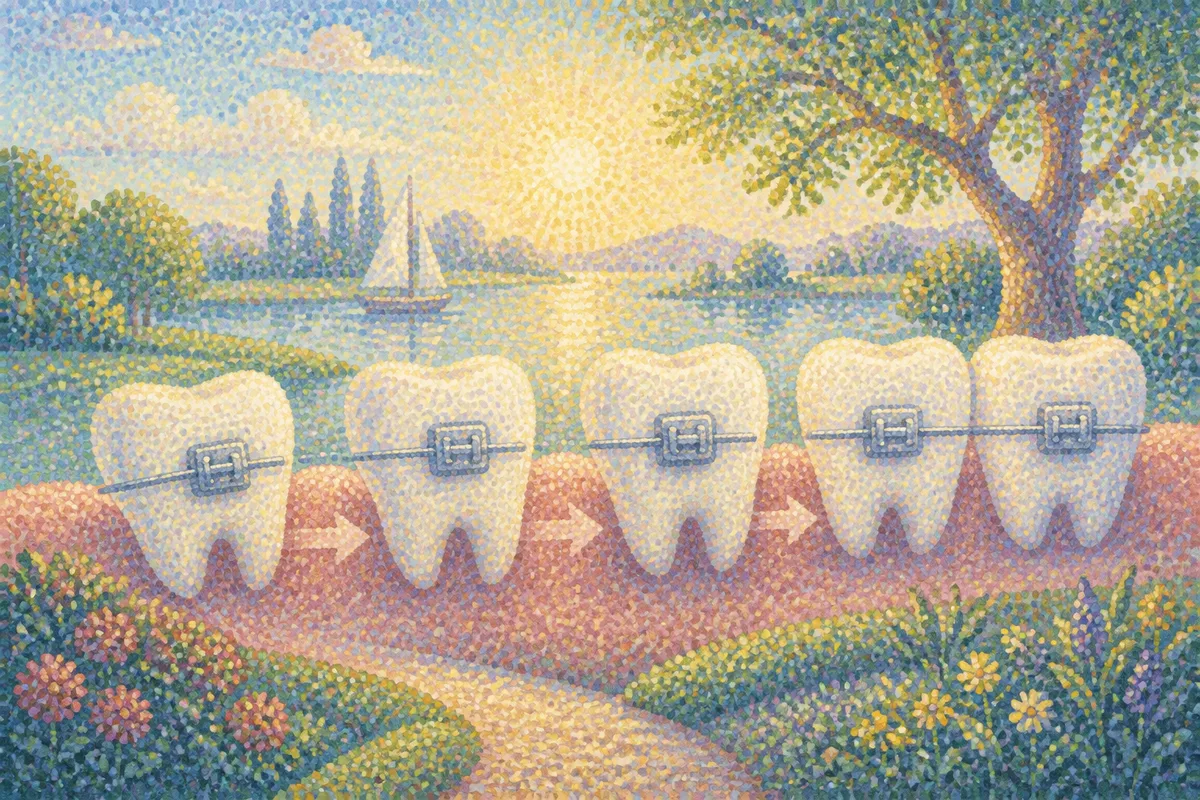
How Braces Actually Move Teeth
Braces look mechanical from the outside, all metal and wire, but what they set in motion is actually a biological process happening inside the jaw. Understanding a little about how that process works can make the months of treatment feel less mysterious and help explain why orthodontists move teeth slowly and deliberately rather than all at once.
At KHL Orthodontics, patients often ask us how a wire and a few brackets can actually shift a tooth. Here is the short version of what is happening beneath the surface, and why the pace of treatment is set the way it is.
Teeth are not fixed in place
It might feel like teeth are anchored solidly into the jawbone, but each tooth actually sits in a socket connected to the bone by a thin layer of tissue called the periodontal ligament. This ligament allows for a tiny amount of natural give, which is what makes controlled movement possible in the first place. Without it, orthodontic treatment as we know it would not work at all.
When a bracket and wire apply a light, steady force to a tooth, that force gets transmitted through the ligament to the surrounding bone. The bone responds to that pressure over time, which is the real engine behind everything braces and aligners accomplish.
How bone responds to gentle pressure
On the side of the tooth where pressure is being applied, bone gradually breaks down to make room for the tooth to shift. On the opposite side, where the ligament is being stretched rather than compressed, new bone begins to form to fill in behind the moving tooth. This dual process, breaking down on one side and rebuilding on the other, is how a tooth can end up in a meaningfully different position over the course of treatment while staying securely anchored the whole time.
This is also why the amount of force matters so much. Braces are designed to use gentle, continuous pressure rather than a strong push. Light forces keep this bone remodeling process working smoothly. Heavier forces do not move teeth faster; they mostly just add unnecessary strain without speeding up the biology involved.
Why treatment takes months, not days
Because this remodeling process depends on the body's own pace, there is a natural limit to how quickly teeth can move safely. Bone needs time to break down and rebuild in an organized way, and rushing that process would work against the goal of ending up with teeth that are stable in their new positions rather than just temporarily nudged.
This is why we make small adjustments over a series of appointments instead of trying to accomplish everything in one visit. Each adjustment gives the ligament and bone a fresh, manageable amount of work to do, which keeps the whole system moving in a controlled, predictable direction.
The deliberate pace is the whole point
It can be tempting to wish treatment moved faster, especially partway through when the visible changes start to slow down. But the same slow, steady process that takes months is also what allows teeth to settle into positions that hold up over time rather than shifting right back. Retention afterward matters too, since bone continues adapting even after the visible part of treatment wraps up.
If you are curious how this process would play out for your own teeth, or you want a clearer sense of a treatment timeline, we are happy to walk through it in detail. Give our Northvale office a call and we can talk through what your specific case would involve.
Questions about your own care? The team at KHL Orthodontics is happy to help — call us at (201) 767-4555 or request an appointment.
This article is for general information only and is not medical advice.